

The Borders That Move More People Than Most Airports
The busiest borders are not flashpoints. They are commuter routes, shopping corridors, and family lifelines that people cross every single day.
Article details
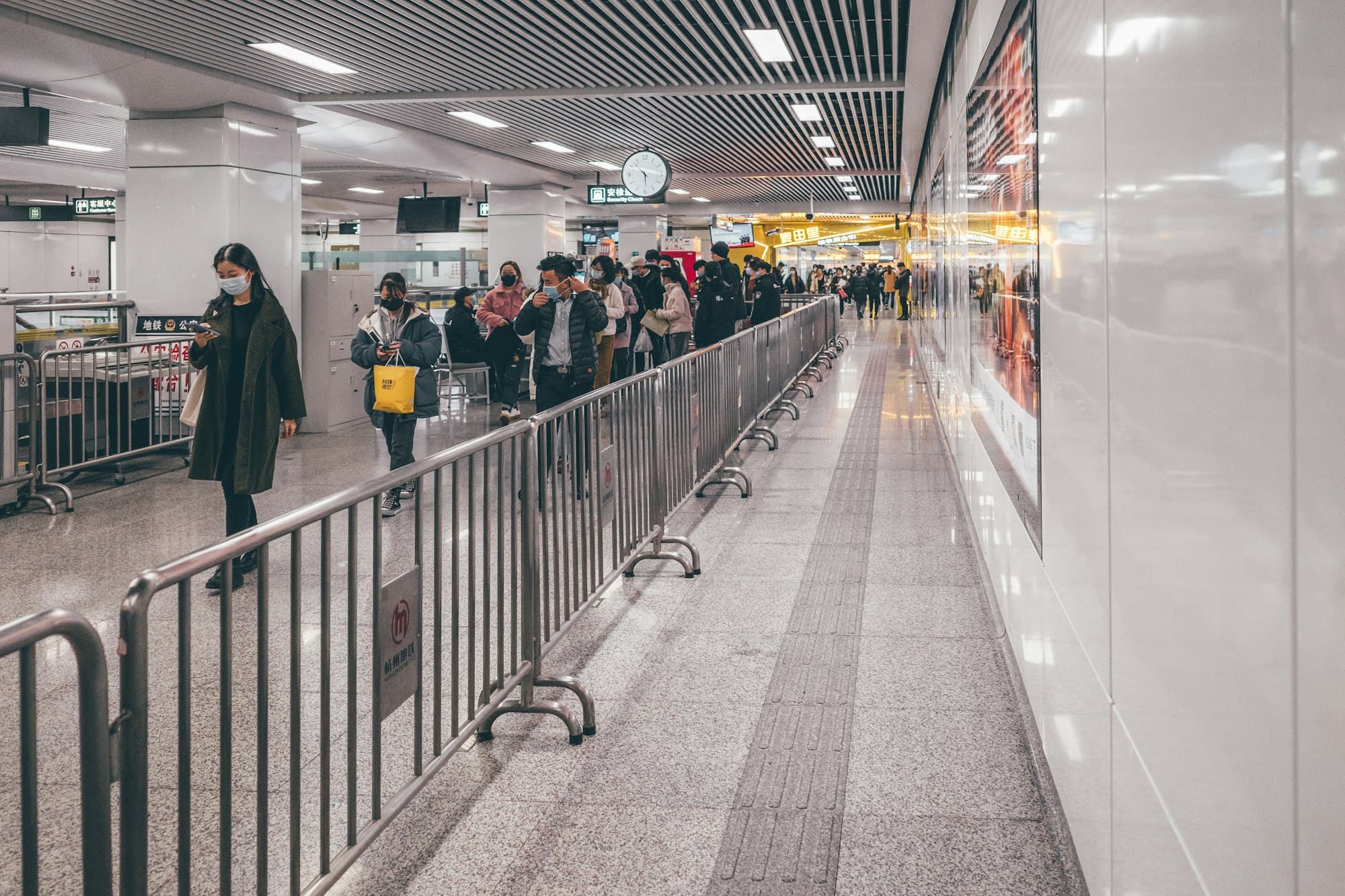
A busy border is rarely what it looks like on a map. The Singapore-Malaysia Causeway moves 350,000 people every single day. Workers heading to offices, families visiting relatives, shoppers chasing better prices. San Ysidro, between San Diego and Tijuana, processes roughly 100,000 daily. Across all U.S. ports of entry, the total is 1.15 million passengers and pedestrians per day. These are not security checkpoints in any meaningful sense. They are daily infrastructure. As routine as a highway on-ramp, and busier than most airports.
Some borders are commuter corridors, not just political edges
A useful comparison is the number of people moving through a crossing or border system on an ordinary day.
What this chart measures
Average daily people crossings (thousands of travelers per day).
How to read it
Selected border systems shown for comparison. The United States figure reflects all ports of entry combined, not one single crossing.
Average daily travellers reported by Singapore government sources.
CBP has described the crossing as processing almost 100,000 people daily.
CBP FY2024 average passengers and pedestrians per day, across the entire system.
The busiest borders are often the ones that have become part of daily life for workers, shoppers, and families.
Busy borders are corridors, not barriers
The busiest borders are busy because they connect two places that already depend on each other. 350,000 people cross the Singapore-Malaysia Causeway daily for work, school, shopping, and family. 100,000 cross San Ysidro between San Diego and Tijuana. These borders are not checkpoints in any meaningful sense. They are operating systems for the relationship between neighbouring places.
- Daily movement is what turns a border into a corridor.
- The most active crossings serve both personal and economic life.
Commuters make borders feel permanent
Some border crossings are busy because people cross them every weekday. Malaysian workers commute into Singapore by the hundreds of thousands. Mexican workers cross into San Diego and back before sunset. Once commuting patterns settle in, the border becomes part of the rhythm of work and family life. As unremarkable as a bridge over a river, and as essential.
- A commute route creates repeat demand that keeps the crossing busy year-round.
- Once people build their lives around it, the crossing stops feeling optional.
Trade adds another layer entirely
Passenger movement is only one part of border activity. Trucks, containers, and commercial flows can make a crossing strategically important even when tourists rarely use it. The U.S.–Mexico border moves $1.8 billion in daily trade. The European Union's internal borders, although largely invisible to travelers, move trillions in goods every year. The busiest borders often carry both workers and goods.
- Trade and travel use the same border, but add different kinds of pressure.
- A border can be economically crucial even if it never makes the news.
The headlines and the traffic are rarely about the same borders
The borders that dominate the news cycle are not always the ones with the most routine movement. Some are politically charged. Others are quietly busy. The Singapore-Malaysia Causeway processes more daily traffic than many international airports, and it almost never makes global headlines. Meanwhile, borders that are genuinely less busy can dominate political debate for years.
- Attention and traffic are different metrics entirely.
- The most interesting borders are often the ones that matter most to daily life, not to public argument.
References
Sources
- 1U.S. CBP Typical Day FY2024
Source for the scale of daily passenger and pedestrian processing across U.S. ports of entry.
- 2Singapore Causeway usage reporting
Reporting on the sustained heavy use of the Singapore-Malaysia Causeway corridor.
- 3Brookings on borders and mobility
Useful background on why heavily used borders often function as shared economic systems.
Start calling abroad
Ready to make the call?
Talkala lets you call real phone numbers abroad from your browser, see the rate before dialing, pay with prepaid credit, and start quickly without a carrier international add-on.